In this article
Key takeaways
- Bandaranaike International Airport is located 35 kilometres north of Colombo and is a single, straightforward terminal handling most international patients arriving for treatment.
- Sri Lanka's Electronic Travel Authorisation system allows most nationalities to receive pre-clearance online within 24 hours, streamlining immigration on arrival.
- Reputable treatment facilities provide private transfers as standard practice, not an optional add-on, coordinated before arrival.
- Transfer times from the airport vary from 45 minutes to Colombo to 3-3.5 hours to hill country facilities, with beautiful landscape introduction en route.
- Arrival protocols prioritize low-key settling-in over institutional check-in, with initial clinical assessment conducted as conversation rather than interrogation.
Arriving at Bandaranaike International Airport
Virtually all international patients travelling to Sri Lanka for treatment arrive at Bandaranaike International Airport (BIA), located at Katunayake, approximately 35 kilometres north of Colombo city centre. The airport is a single terminal building and is straightforward to navigate. It is not a large hub airport - connections are not made here on the same scale as Singapore or Dubai - but it is modern, well-signed, and relatively uncrowded compared to the major Asian transit hubs.
Airlines serving BIA include SriLankan Airlines (the national carrier), Emirates, Qatar Airways, Singapore Airlines, and a growing number of regional carriers. Direct or one-stop flights are available from most major departure cities - London, Sydney, Dubai, Singapore, and Mumbai all have good connectivity. Flight times vary from around 10 hours from London to under two hours from southern India.
Immigration and arrivals
Sri Lanka operates an Electronic Travel Authorisation (ETA) system for most nationalities. The ETA is applied for online before travel and takes effect on arrival - it is not a visa collected at the airport but a pre-clearance that is stamped into the passport at immigration. Most nationalities receive approval within 24 hours of application; the process is simple and the cost is modest.
Is this something you're dealing with?
Free confidential advice - no pressure, no obligation.
Immigration queues at BIA are generally manageable. The arrivals hall is straightforward: immigration, baggage collection, and customs in sequence. There is no arrivals card to complete - immigration is handled digitally. Most patients are through arrivals within 30 to 45 minutes of the aircraft door opening, sometimes faster.
If you are travelling alone and feeling uncertain, it is worth knowing that the airport is calm and well-managed. It does not have the overwhelming scale of major hub airports, and staff are generally helpful to international visitors.
The transfer
Reputable residential treatment facilities in Sri Lanka organise private transfers for all incoming patients. This is not an add-on service - it is standard practice. A driver or clinic representative will be waiting in the arrivals hall with your name on a sign, and from that point the logistics are handled for you.
Private transfer arrangements are coordinated by the clinic before you arrive. You should not need to arrange your own taxi, navigate local transport, or make decisions about getting from the airport to the facility. If a programme does not offer this as standard, it is worth asking why - and it is a reasonable question to raise during any pre-admission conversation.
The transfer vehicle is typically a private car or small van - air-conditioned and comfortable. Drivers are accustomed to collecting patients arriving for treatment and understand that the journey may be one that requires quiet rather than conversation. There is no obligation to talk.
How long does it take
Journey time from the airport to the treatment facility depends entirely on where that facility is located. Sri Lanka is not a large island - it is roughly 435 kilometres from north to south - but road speeds outside Colombo can be slow, and the expressway network, while improving, does not reach all areas.
Common transfer times from BIA:
- To Colombo city area: 45 minutes to 1 hour, depending on traffic
- To the south-west coast (Galle, Unawatuna area): 2 to 2.5 hours via the Southern Expressway
- To the Hill Country (Kandy area): 3 to 3.5 hours
- To coastal areas north of Colombo: 1 to 1.5 hours
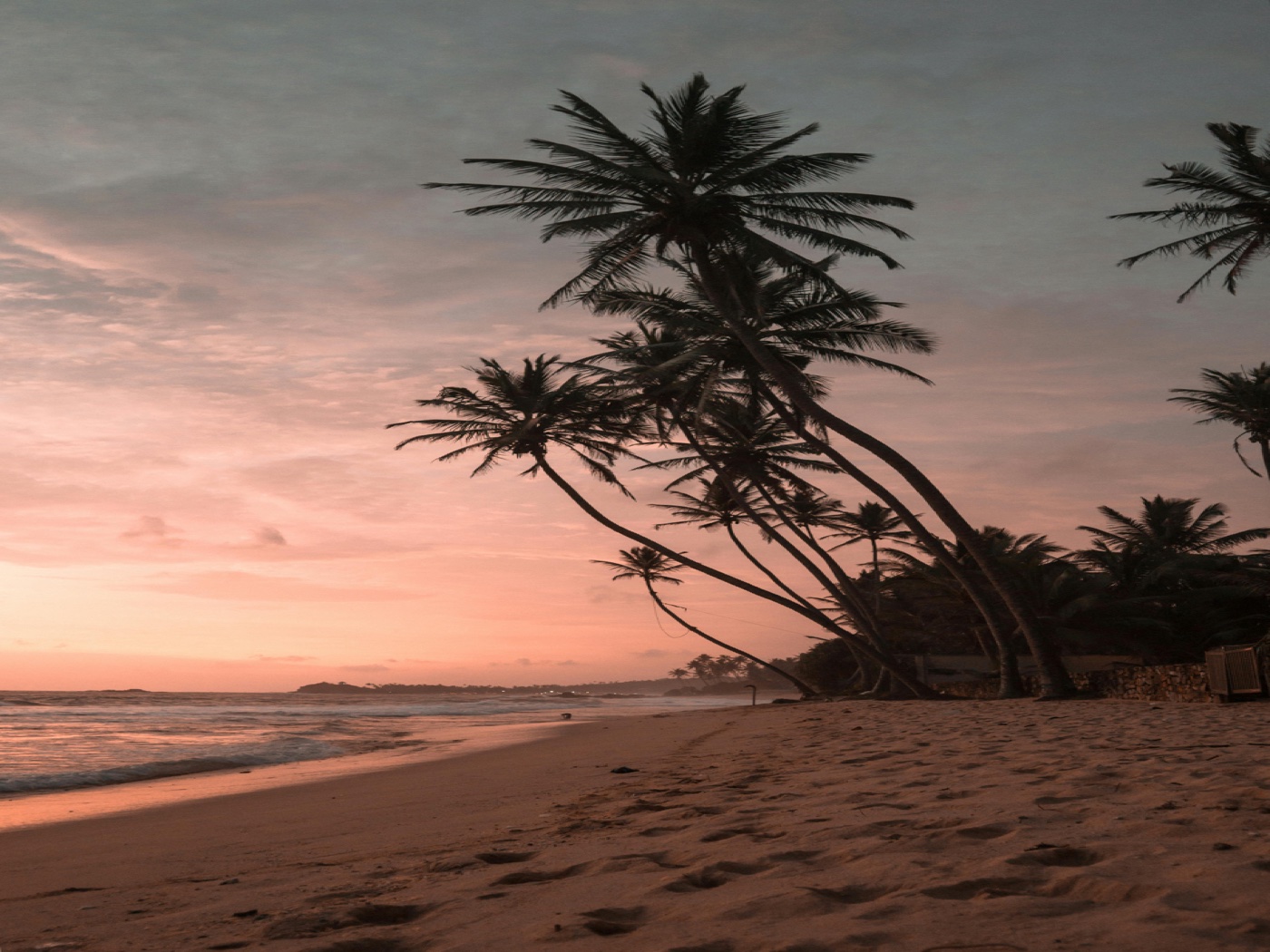
The drive is not unpleasant. Sri Lanka's landscape is genuinely beautiful - the road south in particular passes through palm groves, rice paddies, and eventually the coastal strip that runs down to Galle. For many patients, this is their first experience of the island, and it is a reasonable introduction. The warmth, the light, and the pace of the landscape all signal that you have arrived somewhere genuinely different from where you left.
What happens on arrival at the clinic
Arrival at the facility is typically low-key by design. There is no institutional check-in process, no forms to sign in reception under fluorescent lighting. Most quality residential facilities approach arrival with the understanding that the patient has just completed a long journey and may be tired, anxious, or emotionally depleted - and that the priority is to make them feel settled before anything else happens.
You will be shown to your room. You will be offered food and water. In most facilities, the initial clinical assessment - a conversation with a doctor or admissions clinician to establish baseline health, current substance use, and immediate needs - happens on the first afternoon or evening, and is conducted as a conversation rather than an interrogation.
If a medical detox is required, this will typically begin within the first few hours of arrival, under medical supervision. Medications to manage withdrawal symptoms are administered according to a clinical protocol. The process is managed; it is not left to chance or to the patient to navigate alone.
The first 24 hours
The first day in treatment is not a day of therapy. It is a day of orientation and stabilisation. You will meet the core clinical team - the doctor, your primary therapist, and support staff. You will be shown the facility, given the daily schedule, and have the opportunity to ask questions. You will eat, rest, and begin to acclimatise.
For patients completing a detox, the first several days are primarily physical - the body adjusting to the absence of the substance, supported by medication and monitoring. The therapeutic programme begins properly once the immediate physiological process has stabilised, typically around day five to seven depending on the substance and the individual. This is not lost time. It is a necessary and medically managed part of the process.
What families need to know
If you are a family member reading this to understand what happens when a loved one travels for treatment: the logistics from airport to clinic are managed. You do not need to worry that your family member will be navigating an unfamiliar country alone in a vulnerable state. The handover from airport to facility is a continuous process, coordinated in advance.
Communication arrangements - when and how family members can be in contact - vary by facility and by the stage of treatment. Most programmes ask for a period of limited communication in the first week or two, not to isolate the patient but to allow them to engage fully with treatment without the pull of home relationships that can complicate early recovery. This is discussed and agreed during the pre-admission process. It is worth asking about specifically during any consultation call.
Ready to find out more?
Free confidential advice. We will walk you through the logistics from first contact to arrival - no obligation.
Sources
- National Institute on Alcohol Abuse and Alcoholism. Alcohol Use Disorder. U.S. Department of Health and Human Services.
- National Institute on Drug Abuse. Addiction Science. National Institutes of Health.
- Substance Abuse and Mental Health Services Administration. National Helpline. U.S. Department of Health and Human Services.