In this article
Key takeaways
- Sri Lanka's private residential treatment starts at approximately $9,900 USD per month, consistently more affordable than comparable-quality facilities in Thailand which cost $12,000-$18,000 monthly.
- Thailand offers genuine clinical excellence from accredited facilities like The Cabin Chiang Mai and The Dawn Wellness Centre, but quality varies enormously due to less rigorous regulatory standards for private rehabilitation.
- Sri Lanka's non-party environment with minimal alcohol availability and culture oriented toward nature and wellness is clinically more conducive to early recovery than Thailand's tourist destinations saturated with nightlife and substance access.
- Sri Lanka provides superior privacy for clients from Western and Middle Eastern countries, as it is not associated with overseas rehabilitation whereas Thailand's established reputation makes clients visible to other treatment seekers.
- Both countries offer comparable travel logistics from major cities, but Sri Lanka's UTC+5:30 time zone alignment is better for Australian and UK clinical follow-up calls than Thailand's UTC+7 offset.
Why this comparison matters
Most people considering overseas rehabilitation shortlist Thailand. It is the obvious first search. The industry has been established there for over two decades, the country is familiar to international travellers, and the marketing is sophisticated. Chiang Mai, Phuket, and Koh Samui are well-known names. The imagery - tropical pools, wellness centres, Buddhist temples - is compelling.
Sri Lanka is less well-known as a rehabilitation destination, which is precisely why a direct comparison is worth making. For many clients, Sri Lanka is the better choice. Not in every category, and not for every person - but on the dimensions that matter most for a serious residential rehabilitation programme, Sri Lanka frequently comes out ahead. This article makes that case honestly, acknowledging where Thailand has genuine advantages.
Cost
Both countries offer significantly lower costs than Western private rehabilitation. The comparison between them is closer than many people expect.
Is this something you're dealing with?
Free confidential advice - no pressure, no obligation.
In Thailand, the range is wide. Budget facilities on tourist islands can be found for $3,000 to $5,000 USD per month. Mid-range established clinics in Chiang Mai and Bangkok charge $8,000 to $15,000 per month. The top-end internationally accredited facilities - which are genuinely excellent - charge $18,000 to $30,000 per month. Quality and price are closely correlated: the cheapest options in Thailand are often not comparable to serious private residential treatment.
In Sri Lanka, the market is less fragmented. Quality private residential rehabilitation starts from around $9,900 USD per month. There is less variation at the lower end - the industry is newer and has developed without the backpacker-market facilities that populate parts of Thailand's market. The comparable tier to Sri Lanka's offering in Thailand costs $12,000 to $18,000 per month.
Bottom line on cost: Sri Lanka is consistently more affordable than comparable-quality facilities in Thailand. The gap is not enormous - but over a 60 or 90-day stay, it is meaningful.
Clinical quality
Thailand has some genuinely excellent rehabilitation facilities. The Cabin Chiang Mai, The Dawn Wellness Centre, and a handful of others have built strong international reputations over decades, with accreditations from bodies including CARF (Commission on Accreditation of Rehabilitation Facilities). These are serious clinical operations.
Thailand also has a significant number of lower-quality facilities that market aggressively to international clients. The regulatory environment for private rehabilitation in Thailand is less rigorous than in Australia, the UK, or the US. Quality varies enormously between providers, and the marketing of some facilities significantly overstates their clinical capabilities.
Sri Lanka's private rehabilitation sector is smaller and less established - which is a disadvantage in terms of track record, but an advantage in terms of market composition. There are fewer facilities, less marketing noise, and the operators who have built international practices have generally done so on the basis of clinical credibility rather than marketing spend. The clinicians working at the top facilities are internationally trained, many having worked in Australia, the UK, or the US.
For clients who can identify and access the top-tier facilities in either country, clinical quality is broadly comparable. Sri Lanka has fewer options - but fewer poor options too.
The environment for recovery
This is where the comparison becomes genuinely nuanced.
Thailand, particularly in tourist destinations like Koh Samui, Phuket, and even parts of Chiang Mai, is an environment saturated with alcohol. Beach resorts, nightlife, constant availability of substances, and a cultural setting where heavy drinking by tourists is normalised - these are not trivial background factors for someone in early recovery. Many clients leave a Thai facility and find that the immediate external environment presents immediate relapse risks that would simply not exist in Sri Lanka.
Chiang Mai is a partial exception. The northern city has a more settled, less tourist-party atmosphere than the southern islands, and many of Thailand's more serious clinical facilities are located there for exactly this reason. But even Chiang Mai carries the ambient influence of a major tourist hub in ways that Sri Lanka simply does not.
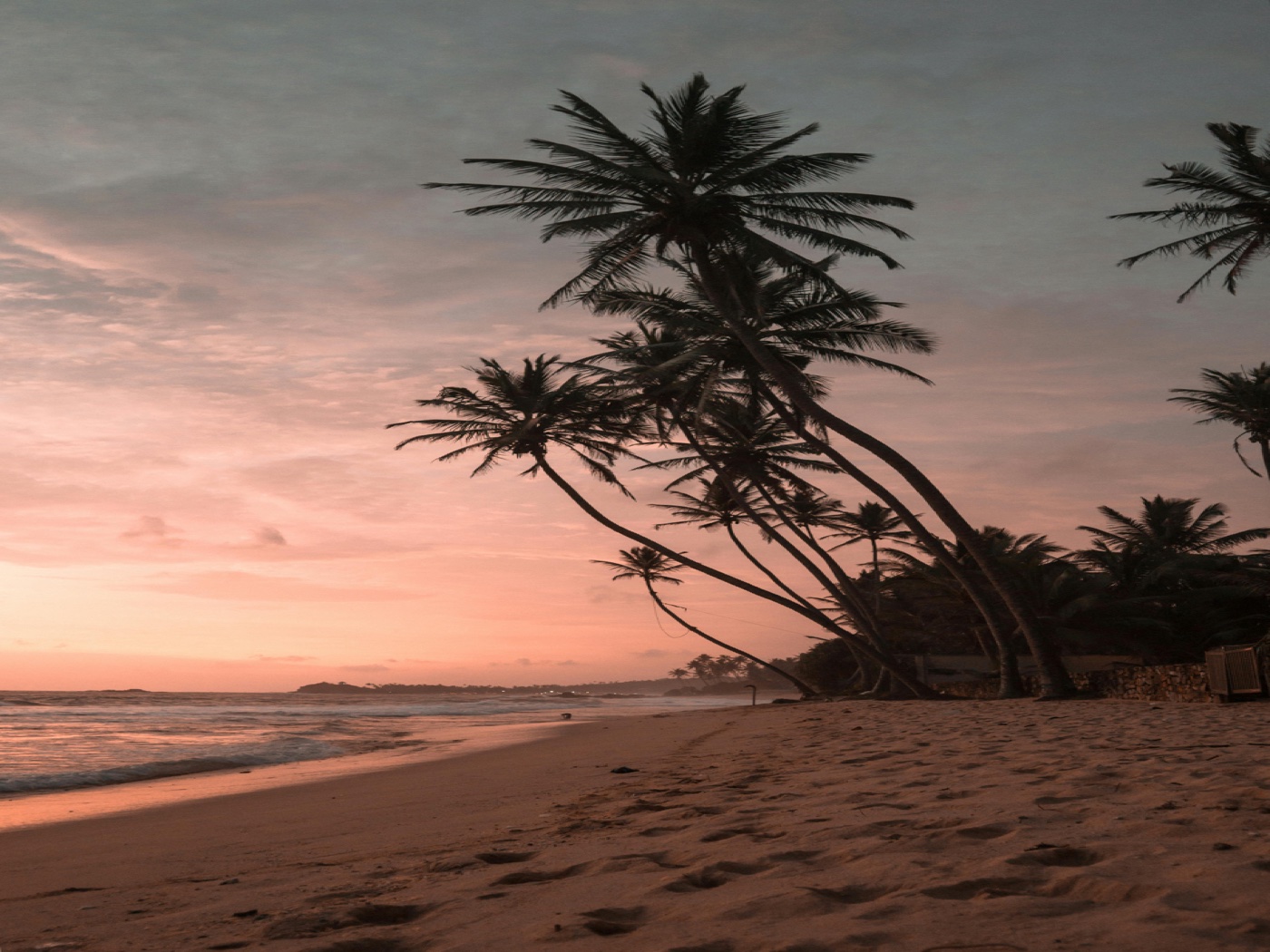
Sri Lanka is not a party destination. Its tourism is oriented around culture, nature, and wildlife rather than nightlife. The social environment of a Sri Lankan town or coastal area is qualitatively different - calmer, less triggering, and more genuinely conducive to the sustained internal work that residential rehabilitation requires. This matters clinically in ways that are hard to quantify but easy to understand.
Privacy and discretion
Thailand is a well-known rehabilitation destination. That means people know you might be there for treatment. Fellow travellers, other rehab clients, even hotel staff in popular areas may have encountered rehabilitation tourists before. The anonymity of being an unknown international visitor is somewhat eroded by Thailand's established reputation.
Sri Lanka is not associated in the public mind with overseas rehabilitation. A client from London or Sydney who is treated in Sri Lanka is, to all practical purposes, invisible. No professional network, no social circle, no industry knows to look for them there. For clients with significant privacy concerns - and a large proportion of people seeking private treatment do have them - this distinction is material.
Travel logistics
For clients from the UK, Australia, Singapore, the UAE, and India, Sri Lanka and Thailand are broadly comparable in travel time and ease. Both are served by good international connections, both have modern international airports, and both require a single connection from most major cities.
| From | To Sri Lanka (CMB) | To Thailand (BKK/CNX) |
|---|---|---|
| London | ~10.5 hrs direct or 13 hrs via hub | ~11–12 hrs via hub |
| Sydney | ~9–11 hrs via hub | ~9–10 hrs via hub |
| Dubai | ~4 hrs direct | ~6–7 hrs |
| Singapore | ~3.5 hrs | ~2–3 hrs |
| New York | ~19–21 hrs via hub | ~18–20 hrs via hub |
| Mumbai | ~3.5 hrs direct | ~5 hrs |
Thailand has a slight edge in connectivity for clients from some Asian cities. Sri Lanka has the edge for clients from the Middle East, India, and certain UK cities. For most clients, there is no meaningful difference.
Aftercare and re-entry
Both countries face the same fundamental aftercare challenge: the client returns to their home country after residential treatment, and the real work of maintaining sobriety in a familiar environment begins. Neither Thailand nor Sri Lanka has a structural advantage here - what matters is the quality of the discharge planning and continuing care arrangements made during treatment.
What Sri Lanka does offer is somewhat better logistical connectivity to Australia and the UK for ongoing clinical contact, given time zone alignment. Sri Lanka runs at UTC+5:30, making clinical follow-up calls with Australian clinics (roughly 4 to 6 hours behind Australian eastern time) more practical than with Thailand (which runs at UTC+7, roughly 3 to 4 hours behind). A minor point, but not irrelevant for clients with ongoing clinical needs.
When Thailand makes more sense
There are situations where Thailand is the right choice. If a client has a strong existing relationship with a specific Thai facility and its clinical team, continuity of care matters more than any abstract comparison. If a client's specific condition is better addressed by a facility that happens to be in Thailand - certain eating disorder programmes, for example - geography follows clinical need. And for clients in Southeast Asia, Thailand's geographic proximity and infrastructure may make it more practical.
But for the large majority of clients from the UK, Australia, New Zealand, the UAE, the US, and India - those who are starting their search fresh and evaluating options on their merits - Sri Lanka presents a compelling case that deserves equal consideration to Thailand, and in most respects a stronger one.
Not sure which is right for you?
Free confidential advice. We will help you think through the right destination and the right programme for your situation.

Sources
- National Institute on Alcohol Abuse and Alcoholism (NIAAA). Understanding alcohol use disorder. U.S. Department of Health and Human Services.
- Substance Abuse and Mental Health Services Administration (SAMHSA). SAMHSA national helpline and treatment services. U.S. Department of Health and Human Services.
- National Institute on Drug Abuse (NIDA). Addiction science: understanding substance use disorders. National Institutes of Health.