In this article
Key takeaways
- Australian private rehab costs between $15,000 and $30,000 AUD for 28 days, with geographic concentration limiting access outside major cities.
- Physical distance from the environment of use is therapeutically beneficial - research shows clients removed from home, triggers, and social circles do better in residential treatment.
- Quality programmes in Sri Lanka employ clinicians with internationally recognised credentials, often trained in the UK, Australia, or the US, operating to evidence-based clinical frameworks.
- Flight time from Sydney or Melbourne to Colombo is 11 to 13 hours with single connections, making logistics straightforward and comparable to domestic travel within Australia.
- The five and a half hour time difference between Sri Lanka and Sydney is manageable for family communication, and distance becomes clinically valuable rather than a disadvantage within the first week of treatment.
The Australian rehab landscape
Australia has a serious addiction problem and a treatment system that has not kept pace with it. Public addiction services are chronically underfunded. Waiting lists for quality residential treatment through public channels run to weeks or months. The private sector has grown to fill the gap, but it remains geographically concentrated - the bulk of quality private residential facilities are in Queensland, New South Wales, and Victoria - and expensive relative to comparable programmes in Asia.
For Australians outside the major urban centres, the practical barriers are compounded by geography. The country is vast. Travelling from Perth to a quality residential programme in Queensland involves a five-hour flight and a price comparable to flying to Bali. That context is part of why looking further afield begins to make sense.
What Australian private rehab costs
Quality private residential treatment in Australia typically costs between $15,000 and $30,000 AUD for a 28-day programme, depending on the facility, location, and level of clinical intensity. Some luxury-positioned programmes exceed this substantially. These costs are generally not covered by Australian private health insurance for addiction treatment, though some policies provide partial cover for detox or co-occurring mental health conditions. The out-of-pocket cost for a quality 28-day programme is, for most Australians, significant.
Is this something you're dealing with?
Free confidential advice - no pressure, no obligation.
By contrast, comparable clinical quality in Sri Lanka - with international staff, evidence-based treatment modalities, and comfortable residential facilities - costs a fraction of the Australian equivalent. The cost differential alone does not determine where someone should seek treatment, but it is a material factor, particularly when financial stress is itself a contributor to the person's situation.
The distance argument
There is a well-established clinical principle behind the decision to travel for treatment: physical distance from the environment of use is itself therapeutic. Research on residential treatment outcomes consistently finds that clients who are removed from their usual environment - their home, their social circle, their usual suppliers and triggers - do better than those who remain in proximity to those factors during treatment. This is one of the original arguments for residential over outpatient treatment, and it applies with equal force to the question of how far to travel.
For many Australians, the environment of their drinking or drug use is deeply embedded in their geography. The pub near the office, the house where the habit developed, the social group that normalises it. Sri Lanka removes all of that. This is not about running away - it is about creating the conditions in which serious psychological work can happen.
Asia's appeal
Southeast Asia has been attracting medical tourists from Australia for decades, primarily for elective procedures at a fraction of Australian prices. Addiction treatment has followed a similar pattern. Thailand was an early destination, with a number of facilities - varying considerably in quality - establishing themselves to serve an international market. The landscape has matured, with clearer differentiation emerging between clinical facilities and wellness retreats that market themselves as rehabilitation.
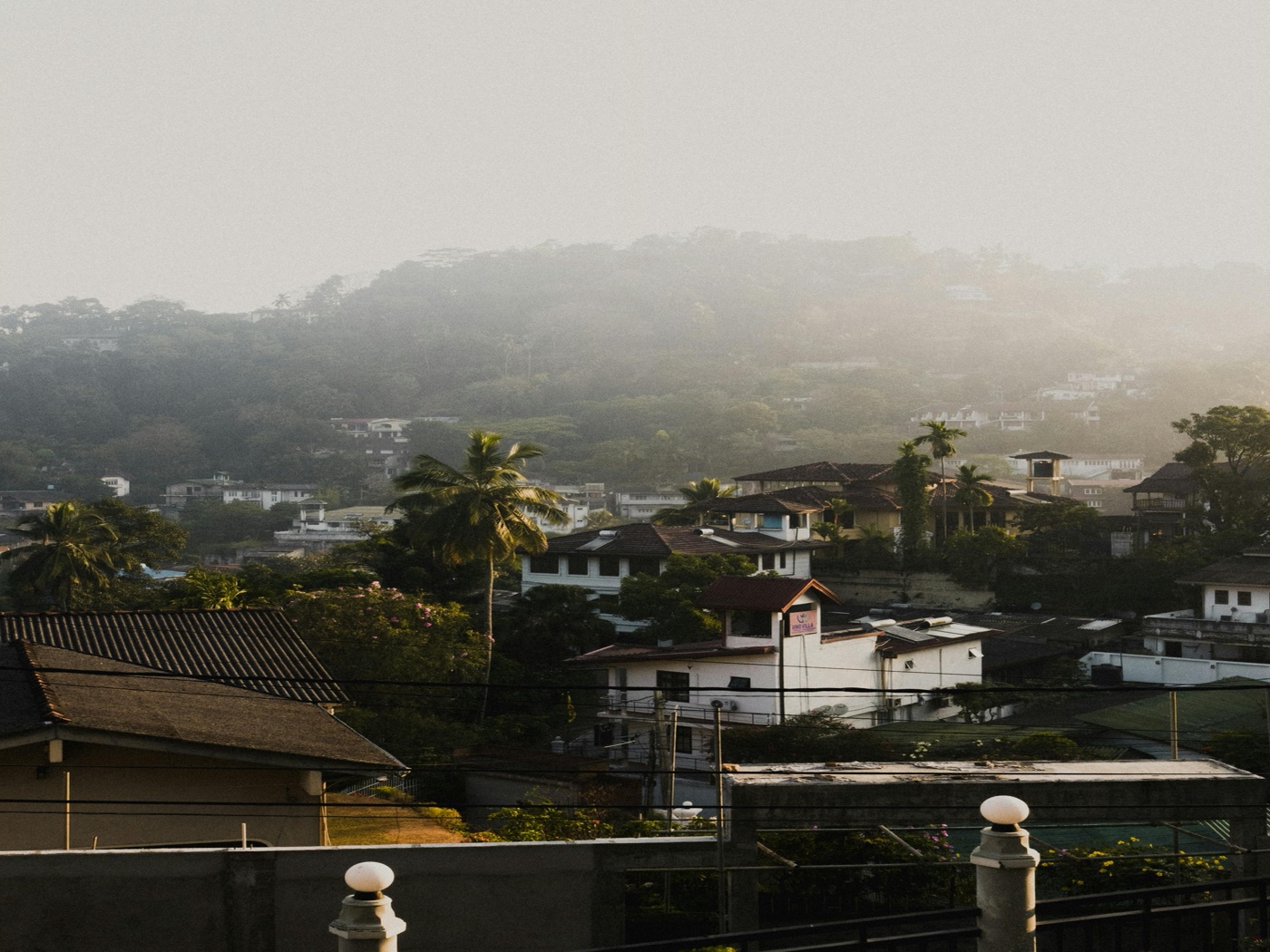
Sri Lanka entered this market later but with a different profile. Fewer facilities, higher clinical standards relative to price, and a setting that is quieter and less touristic than Phuket or Koh Samui - which matters clinically. A treatment environment that resembles a tourist destination is not necessarily optimal for people doing serious psychological work.
Sri Lanka vs Thailand for Australians
The comparison between Thailand and Sri Lanka is worth addressing directly. Thailand has more facilities, a larger market, and greater name recognition. It also has a substantially larger party and tourism infrastructure, which creates environmental considerations for people in early recovery. Sri Lanka is quieter, less internationally prominent as a tourist destination, and has a more contained private treatment market - which means more careful vetting is required, but that what exists tends to be serious. Flight times from Sydney or Melbourne are broadly comparable: 11 to 13 hours with connections through Singapore, Kuala Lumpur, or Bangkok.
The clinical question
Australian health professionals operate under AHPRA registration, and there is a reasonable question about whether internationally based clinicians hold equivalent qualifications. The honest answer is: it depends on the facility. Quality programmes in Sri Lanka employ clinicians with internationally recognised credentials - often trained in the UK, Australia, or the US - and operate to clinical frameworks that are consistent with evidence-based practice. The question to ask of any programme is not where it is located but who its clinicians are, what their training is, and what treatment modalities they use. Those questions have clear answers from serious facilities.
Flights and logistics
From Sydney or Melbourne, Colombo is approximately 11 to 13 hours with a single connection - typically through Singapore (Singapore Airlines), Kuala Lumpur (Malaysia Airlines), or Bangkok (Thai Airways or SriLankan Airlines). SriLankan Airlines also operates connections through the Middle East. There are no direct services from Australia to Colombo, but the journey is well-served and straightforward. For Australian clients, the time zone difference - Sri Lanka is five and a half hours behind Sydney in summer - is manageable and does not significantly complicate family communication during treatment.
Practical considerations
Australian clients considering treatment abroad should be aware of a few practical points. DVA (Department of Veterans' Affairs) cover for overseas treatment is limited - veterans should speak to their DVA case manager before assuming cover exists. Australian private health insurance generally does not cover overseas addiction treatment, though it is worth checking the specific policy. From a tax perspective, medical expenses incurred overseas are treated the same as domestic expenses for the purposes of any applicable Australian offsets. These details are worth clarifying before committing, but none of them are typically prohibitive.
What Australian clients typically say
The feedback from Australian clients who have completed treatment in Sri Lanka tends to centre on two things: the quality of the clinical work and the surprise of how effective the distance turned out to be. The distance from home that initially felt like a disadvantage - being that far away, being unreachable by the social dynamics of their usual life - becomes, within a week of arrival, the thing they are most grateful for. Treatment that happens far from home, in a setting that provides no ambient triggers or social pull back toward the old patterns, can achieve in four weeks what might take considerably longer in a familiar environment.
A practical note for Australians: The time difference between Sri Lanka and Australia is workable for family communication - a brief daily call at an agreed time keeps family connected without disrupting the programme. Many clients find that their families are more supportive of the decision to travel once they understand the clinical rationale behind it.
Based in Australia and considering treatment?
Free confidential advice. We understand what Australian clients need and how to make the process straightforward.

Sources
- National Institute on Drug Abuse. Principles of Drug Addiction Treatment: A Research-Based Guide. NIDA, National Institutes of Health.
- Substance Abuse and Mental Health Services Administration. National Helpline: Free, Confidential, 24/7. SAMHSA, U.S. Department of Health and Human Services.
- WHO. Mental Health: Substance Use. World Health Organization.